
Choosing a headstone or grave marker involves more than deciding what you want the memorial to look like. Before ordering a monument, families also need to know what the cemetery will actually allow.
Cemeteries can establish their own requirements for headstone sizes, monument styles, materials, foundations, installation, vases, photographs, and other features. Rules may even differ between sections of the same cemetery. A beautiful custom monument can become a costly problem if it is designed before these restrictions are confirmed.
Whether you want to buy a headstone in Maryland, planning a companion monument for two people, or replacing an older family memorial, asking the cemetery the following questions before approving the design can prevent delays and unexpected expenses.
1. What Types of Headstones and Grave Markers Are Allowed?
Start with the most basic question: what type of memorial can be installed on the grave? Depending on the cemetery and section, permitted memorials may include:
- Upright headstones
- Flat granite markers
- Bronze markers
- Slant monuments
- Bevel markers
- Double or companion headstones
- Family monuments
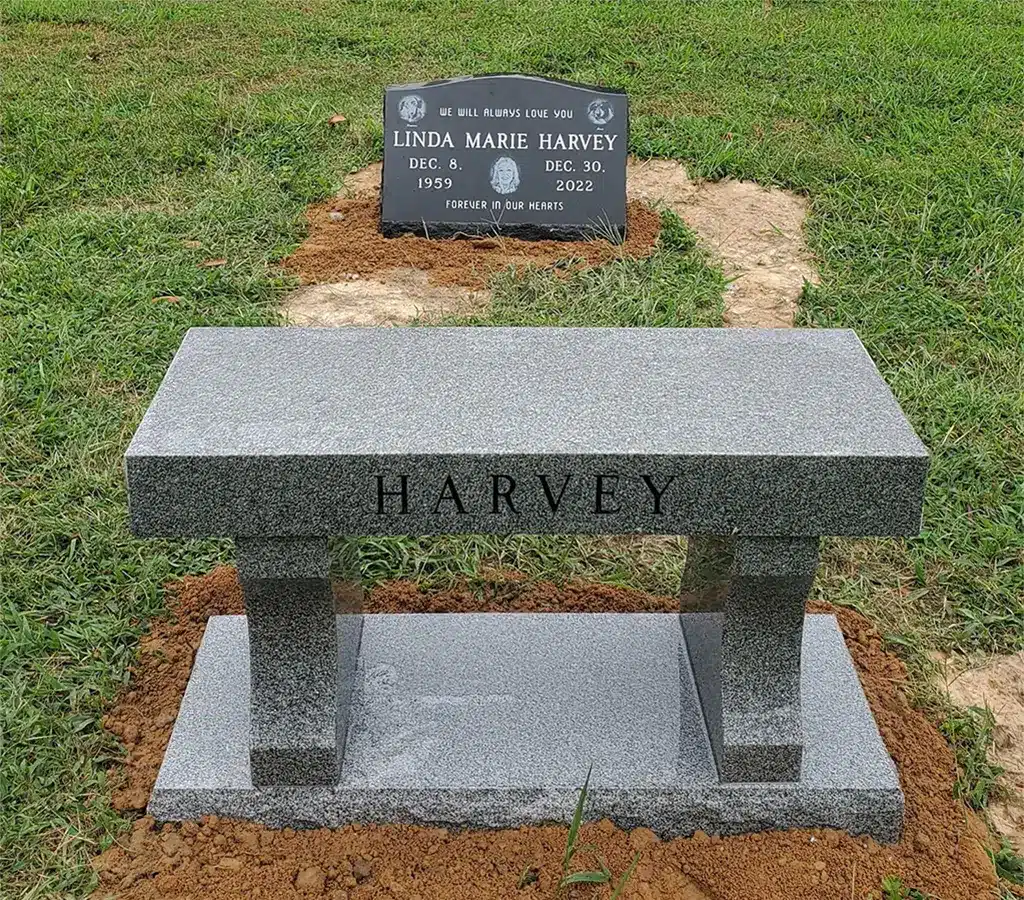
- Benches
- Cremation memorials
Some cemetery sections are designed exclusively for flat markers to maintain an open lawn appearance. Others permit upright monuments but impose specific requirements on their dimensions.
Do not assume that a monument is permitted simply because you see similar memorials elsewhere in the cemetery. Older sections may operate under different rules, and some existing monuments may have been installed before current regulations took effect.
2. What Are the Maximum and Minimum Monument Dimensions?
Ask for the cemetery’s requirements in writing, including permitted height, width, thickness, and base dimensions. This becomes particularly important when purchasing a double headstone. A companion monument spanning two burial spaces may be permitted to be wider than a single monument, but the cemetery may still establish a maximum width. The dimensions of the burial lot itself are not necessarily the dimensions available for the memorial.
3. Are There Different Rules for This Particular Cemetery Section?
One of the easiest mistakes to make is asking for the cemetery’s general monument rules without confirming the requirements for the actual grave. A cemetery might contain an upright-monument section, a lawn section requiring flush markers, a veterans section, a cremation area, and older sections operating under different rules. Ask the cemetery to confirm the requirements using the exact section, lot, and grave number whenever possible.
4. Can We Purchase the Headstone From an Independent Monument Company?
Ask whether you are free to purchase the memorial from an outside monument company. Families may assume they must purchase a headstone directly through the cemetery, but that is not necessarily the case. An independent monument company can often help families compare granite colors, monument shapes, engraving options, artwork, and custom designs while coordinating with the cemetery regarding its requirements. If the cemetery permits outside monuments, ask what documentation or approval it requires before installation.
5. Does the Cemetery Need to Approve the Design Before It Is Made?
Some cemeteries require a drawing, rendering, permit application, or monument order form before fabrication begins.
Find out:
- Who approves the design?
- What information must be submitted?
- Is there an approval fee?
- How long does approval usually take?
- Does approval need to occur before the stone is ordered or engraved?
This step is particularly important with custom headstones, unusual shapes, larger monuments, or designs containing features the cemetery may regulate.
6. Are There Restrictions on Granite Color or Monument Material?
Granite is one of the most common materials used for cemetery monuments because of its durability and the variety of colors and finishes available. However, that does not mean every cemetery permits every option. Ask whether there are requirements concerning:
- Granite color
- Bronze
- Marble
- Natural stone
- Polished versus unpolished surfaces
- Monument thickness
- Matching existing memorials
Certain cemetery sections may be intentionally designed to maintain a consistent appearance.
7. What Kind of Foundation Does the Monument Require?
The foundation underneath a headstone is largely invisible once installation is complete, but it is extremely important to the monument’s long-term stability.
Ask whether the cemetery requires a particular concrete foundation depth, width, or construction method and who is responsible for providing it.
You should also find out whether the foundation is included in an installation fee or charged separately. Larger upright monuments and companion headstones can be extremely heavy. Proper preparation underneath the stone helps reduce movement, leaning, and settling over time.
8. Who Is Allowed to Install the Headstone?
Some cemeteries perform monument installations themselves. Others allow approved monument dealers to handle installation.
Ask:
- Who installs the memorial?
- Does the installer need cemetery approval?
- Are there installation fees?
- Are foundations handled separately?
- Does the cemetery restrict installation to certain months or weather conditions?
- Is advance scheduling required?
Knowing this before ordering makes it easier to understand the complete process rather than focusing only on the price of the stone itself.
9. When Can the Headstone Be Installed After Burial?
A family may want the permanent memorial installed as quickly as possible, but immediate installation is not always possible. Cemetery policies, foundation preparation, ground conditions, weather, monument production time, and installation schedules can all affect timing. Ask whether the cemetery imposes a waiting period following burial and whether seasonal restrictions could delay installation.
10. Are Double Headstones Allowed?
If the memorial will commemorate a married couple or two family members, specifically ask about double headstones or companion monuments. Do not simply ask whether upright monuments are permitted. Find out whether one monument can span two adjoining grave spaces and what dimensions apply. The cemetery may also have requirements concerning where the monument must be centered in relation to the two graves.
This is especially important when one spouse has died and the other is still living. Confirming the requirements now allows the monument to be designed for both people from the beginning.
11. Can a Living Person’s Name Be Engraved on the Monument?
Families planning a husband-and-wife headstone may want to engrave both spouses’ names and birth dates while leaving the surviving spouse’s death date blank. Ask whether the cemetery permits pre-need inscriptions for living people and whether there are any special requirements. If it is allowed, the monument can be designed as a complete companion memorial now, with adequate space reserved for the future date.
12. How Will a Future Death Date Be Added?
If one spouse is still living, think beyond the initial installation. Ask whether future lettering can be completed at the cemetery and whether the cemetery charges an additional fee or requires authorization before inscription work takes place. The monument itself should also be designed with sufficient space for the future date. Letter size, spacing, font, carving technique, and placement should be documented so the later inscription can match the original work as closely as possible.
13. Are Memorial Portraits or Photographs Allowed?
Families increasingly personalize monuments with ceramic photographs, laser-etched portraits, and scenes etched into granite. Before including one, ask whether the cemetery restricts:
- Ceramic portraits
- Cameo photographs
- Portrait sizes
- Placement
- Color images
- Attached versus engraved memorial features
If portraits are important to your design, verify the rules before deciding on the size and layout of the monument.
- Are There Restrictions on Artwork, Symbols, or Inscriptions?
Cemetery rules can extend beyond the physical dimensions of a monument.
Ask whether there are restrictions on decorative elements, religious symbols, organizational emblems, military insignia, quotations, epitaphs, or other inscriptions.
This is particularly worth confirming when ordering a highly customized monument containing detailed imagery.
15. Are Headstone Vases Allowed?
A headstone with a vase can give families a designated place for flowers without placing a separate container beside the grave. However, vase rules vary considerably.
Ask whether the cemetery permits:
- Granite vases
- Bronze or metal vases
- In-ground vases
- One vase or two
- Vases attached to the monument or base
- Vases on flat grave markers
For a double headstone, also ask whether two vases can be placed symmetrically on either side of the monument.
16. What Are the Rules for Flowers and Grave Decorations?
Even if a vase is permitted, cemeteries may regulate what can be placed inside or around it. Rules can address fresh flowers, artificial flowers, wreaths, flags, solar lights, photographs, seasonal decorations, balloons, stuffed animals, and other objects.
Also ask when decorations are removed. Some cemeteries conduct scheduled cleanups several times a year and remove items remaining at gravesites. Knowing the policy can prevent meaningful decorations from being unintentionally discarded.
17. Are There Additional Cemetery Fees?
The purchase price of the headstone may not represent the complete cost of placing it in the cemetery. Ask about possible charges for:
- Monument permits
- Design approval
- Foundations
- Installation
- Setting fees
- Inspection
- Future inscriptions
- Removing an existing marker
- Additional cemetery paperwork
Requesting an itemized explanation can make it easier to understand which costs come from the monument company and which are charged directly by the cemetery.
18. Can an Existing Headstone Be Replaced?
Families sometimes decide to replace an older monument because it is damaged, difficult to read, no longer reflects the family’s wishes, or needs to accommodate another family member. Ask whether replacement is permitted and what authorization is required. The cemetery may also have specific procedures for removing or disposing of the original monument.
19. Can an Existing Headstone Be Modified?
Replacement is not always necessary.\ Depending on the stone and desired changes, it may be possible to add another name, death date, inscription, vase, portrait, or other feature to an existing memorial. Ask whether the cemetery permits modifications and whether the monument needs to be removed from the cemetery for the work.
A monument professional can then evaluate whether the existing stone itself can accommodate the requested changes.
20. What Happens If the Headstone Settles, Tilts, or Is Damaged?
A cemetery monument is intended to remain in place for generations, so it is worth asking about long-term responsibilities before installation. Who is responsible if the monument begins leaning? What happens if lawn equipment damages the stone or a vase? Who maintains the foundation? Does the cemetery reset monuments, or is that the family’s responsibility? Understanding the division of responsibility between the cemetery, monument company, and family can be valuable years after the original purchase.
21. Are There Special Rules for Cremation Memorials?
Cremation can create additional memorial options, but cemetery rules still apply.
If cremated remains will be buried, ask about marker dimensions and whether multiple urns can share a burial space. If one spouse is traditionally buried and the other plans to be cremated, ask whether both can ultimately be memorialized on the same companion headstone.
These decisions are much easier to incorporate into a monument when they are considered before the design is finalized.
Bring the Cemetery Information to Your Monument Appointment
You do not need to understand every technical detail in the cemetery’s regulations yourself. What matters is obtaining accurate information before the memorial is fabricated. Bring the cemetery name, section, lot and grave numbers, deed or burial-right information, and any written monument regulations to your appointment with the monument company.
An experienced Maryland monument company can use those details to help determine which headstones and grave markers meet the cemetery’s requirements while still giving your family meaningful choices for granite, shape, lettering, artwork, vases, and personalization.
Choosing a Cemetery Memorial in Maryland
A cemetery’s rules establish the boundaries of a memorial design, but they do not have to determine everything about it. Even within strict size and material requirements, families can often personalize a monument through its granite color, lettering, epitaph, artwork, religious imagery, portraits, family names, wedding dates, floral designs, and other meaningful details.
Tegeler Monument Company helps families throughout Maryland and the surrounding region navigate the process of choosing headstones, grave markers, companion monuments, double headstones, cremation memorials, and custom cemetery monuments. By confirming cemetery requirements before the monument is ordered, families can focus on creating a lasting memorial without discovering late in the process that an important element needs to be redesigned.
Contact Us
Choosing a memorial involves decisions that families may only make once or twice in a lifetime, and cemetery requirements can make the process even more complicated. Tegeler Monument Company can help you understand your cemetery’s regulations, explore your monument options, and create a memorial that honors your loved one while meeting the requirements of the cemetery.
We work with families throughout Maryland and the surrounding region to design custom headstones, grave markers, double and companion monuments, cremation memorials, monuments with vases, and other personalized memorials.
Contact Tegeler Monument Company to discuss your cemetery, burial location, design ideas, and questions. Our team can help you determine what is permitted and guide you through the process from selecting the stone and designing the inscription to preparing the memorial for installation.
Comments are closed