
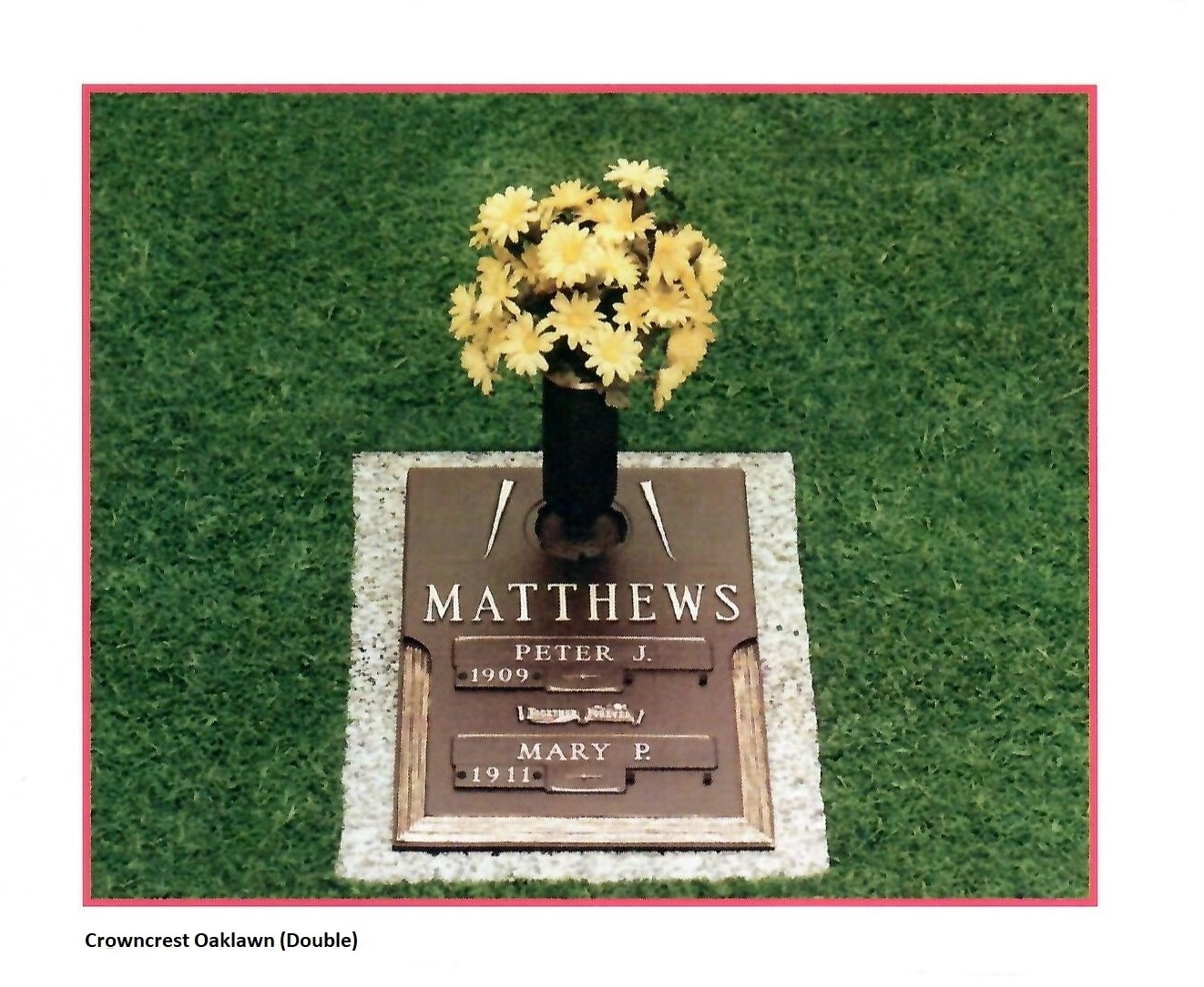
Choosing a headstone for two people involves more than selecting a design. Families must consider cemetery regulations, available space, maintenance requirements, personalization options, and the type of memorial that best reflects their loved ones’ wishes.
For couples and family members who want to be remembered together, double flat grave markers offer a practical and meaningful alternative to traditional upright headstones. These low-profile memorials provide space for two names, dates, and personalized inscriptions while maintaining a simple, understated appearance.
But are double flat headstones always the better choice? Not necessarily. Upright companion headstones offer greater visibility and more opportunities for elaborate memorial designs, while flat markers can be more economical and better suited to cemeteries with specific monument restrictions.
Understanding the differences can help families select a lasting memorial that balances appearance, affordability, and personal preferences.
What Is a Double Flat Grave Marker?
A double flat grave marker, sometimes called a flat companion grave marker or double flat headstone, is a memorial designed to commemorate two individuals on a single stone. Unlike upright monuments, which stand vertically above the ground, flat markers are installed horizontally, typically flush with the surrounding grass or slightly raised, depending on cemetery requirements.
Double flat grave markers are commonly selected for married couples, partners, siblings, or other family members who wish to share a memorial.
Most are made from durable granite and can be customized with:
- Two names and corresponding birth and death dates
- Shared family surnames
- Wedding dates or meaningful anniversaries
- Religious symbols, crosses, or other meaningful imagery
- Floral carvings and decorative borders
- Personalized epitaphs, quotations, or inscriptions
- Etched portraits or other custom artwork, where the stone and design allow
Although these markers have a lower profile than upright monuments, they can still serve as distinctive, personalized tributes.
Importantly, a double grave marker does not necessarily mean that two people are buried in the same grave. Depending on the cemetery’s layout and regulations, a shared marker may identify two adjacent burial spaces or another approved companion burial arrangement.
Double Flat Grave Markers vs. Upright Headstones: Understanding the Differences
Both flat and upright companion headstones provide permanent memorialization for two individuals, but their physical characteristics and practical considerations differ.
| Feature | Double Flat Grave Marker | Upright Companion Headstone |
| Appearance | Horizontal, low-profile design | Vertical, prominent monument |
| Visibility | More subtle, especially from a distance | Generally easier to locate |
| Cost | Often less expensive for comparable materials and simpler designs | Often more expensive due to additional stone and installation requirements |
| Personalization | Names, dates, symbols, and selected artwork | More room for elaborate carvings and inscriptions |
| Maintenance | May collect grass clippings, soil, or standing water | Generally more visible above landscaping |
| Cemetery restrictions | Often permitted in lawn-level memorial sections | May be restricted in certain sections |
| Installation | May be flush or slightly raised | Typically requires a foundation and base |
Neither memorial style is inherently superior. The better choice depends on the family’s priorities, cemetery regulations, and desired design.
6 Situations When Double Flat Grave Markers May Be the Better Choice
1. When the Cemetery Restricts Upright Headstones
One of the most important considerations when selecting a grave marker is whether the cemetery permits the preferred memorial style.
Some cemeteries maintain designated sections that allow only flat grave markers. These rules may help preserve a consistent landscape, accommodate mowing equipment, or maintain a particular appearance throughout the grounds. Cemetery regulations may also establish requirements for:
- Maximum grave marker dimensions
- Approved monument materials
- Whether markers must be flush with the ground
- Placement across single or adjoining burial plots
- Foundation and installation specifications
- Permitted engraving, photographs, or decorative features
Families purchasing double grave markers in Maryland, Washington, D.C., Virginia, or Pennsylvania should verify the specific cemetery’s requirements before selecting a monument. Even within the same cemetery, regulations may differ between burial sections.
When a flat marker is the better choice: If an upright companion headstone is prohibited in the designated burial area, a double flat granite marker may provide an attractive and compliant alternative.
2. When Families Want a More Affordable Companion Memorial
Cost is another reason families consider double flat grave markers instead of upright monuments. While pricing varies considerably based on granite type, dimensions, engraving, and installation, flat markers often require less material and simpler installation arrangements than larger upright headstones.
Several factors influence the final double flat grave marker cost, including:
- Granite selection: Standard granite colors may be more economical than specialty or imported varieties.
- Marker dimensions: Larger companion grave markers generally require more material and may involve additional production and transportation costs.
- Engraving and personalization: Standard lettering may cost less than detailed artwork, portraits, custom etching, or intricate carved designs.
- Installation requirements: Cemetery foundation specifications, setting fees, and other installation requirements can affect the overall price.
- Cemetery charges: Some cemeteries impose separate fees for monument approval, foundations, or installation.
Families should compare the complete cost of each memorial option rather than focusing solely on the stone’s purchase price. For example, a heavily customized double flat headstone may cost more than a simple upright monument. However, when comparing similarly sized and styled memorials, flat markers can offer a more economical solution.
3. When a Simple, Understated Memorial Is Preferred
Not every family wants a large or highly visible monument. Some prefer a modest memorial that blends naturally into the cemetery landscape while still providing a meaningful place to remember their loved ones. Double flat headstones can be especially appropriate for individuals who valued simplicity, privacy, or understated elegance. A flat marker can incorporate a shared surname, two names, meaningful dates, and a brief inscription without requiring an elaborate monument.
For example, a companion grave marker might include a couple’s names beneath a shared family surname, accompanied by their wedding date or a short phrase such as “Together Forever.”
Families can also choose from different granite colors, lettering styles, and decorative details to create a personalized appearance.
4. When Both Individuals Want to Share One Memorial
Companion memorials allow two people to be commemorated together, creating a lasting visual connection between their lives. Although upright companion headstones are a popular choice for couples, double flat grave markers offer the same opportunity in a lower-profile format. Families may choose to include a shared inscription, wedding anniversary, religious symbol, or other meaningful detail that reflects the relationship.
A double grave marker can also be planned before both individuals have passed away. In these situations, the stone may initially include both names and available dates, with the remaining information added later.
However, families should discuss future engraving arrangements with their monument provider. Lettering techniques, stone accessibility, and cemetery rules can affect how additional inscriptions are completed.
When a flat marker is the better choice: For couples or family members who want one coordinated memorial without the size or prominence of an upright monument, a double flat headstone offers a practical alternative.
5. When Cemetery Space or Layout Makes Upright Monuments Impractical
Available burial space can influence which memorial styles are appropriate. Some cemetery sections are designed specifically for lawn-level markers, while others have restrictions related to plot boundaries, monument foundations, or the placement of shared memorials. A double flat grave marker may be suitable for adjoining burial plots where the cemetery permits a shared memorial.
However, families should not assume that a single marker can automatically span two graves. The cemetery may require a specific placement, approved dimensions, or written authorization. The size of a companion marker should also allow enough room for both names and dates to remain legible.
6. When Families Prefer a Low-Profile Memorial Landscape
The appearance of the surrounding cemetery can also influence the decision. Flat grave markers create a more continuous landscape because they sit at or near ground level. Some families appreciate this appearance, particularly in memorial gardens and cemetery sections designed around lawn-level monuments.
Flat markers can also accommodate routine cemetery mowing when properly installed according to cemetery specifications.
However, low maintenance does not mean maintenance-free. Flat grave markers may accumulate dirt, grass clippings, leaves, or standing water. Over time, nearby grass may grow over the marker’s edges, making the inscription less visible. Upright headstones have their own maintenance considerations, including cleaning exposed surfaces and monitoring the condition of the foundation.
When Is an Upright Companion Headstone the Better Choice?
Although double flat grave markers offer several advantages, upright companion headstones may be more appropriate in certain circumstances.
Greater Visibility Within the Cemetery
An upright headstone is generally easier to identify from a distance. This can be especially valuable in larger cemeteries where visitors may have difficulty locating a flat marker among many similar memorials. For families who expect frequent visits or want a clearly recognizable family memorial, an upright monument may be preferable.
More Space for Detailed Memorial Designs
Upright companion headstones often provide larger surfaces for custom artwork, elaborate inscriptions, and decorative carvings. Families interested in intricate designs, sculpted details, or extensive personal tributes may find that an upright monument offers greater flexibility.
While double flat headstone designs can also incorporate artwork and personalization, the available surface area and engraving methods may limit certain design choices.
A More Traditional Monument Appearance
For some families, an upright headstone represents the traditional appearance they associate with cemetery memorialization. Upright monuments can also complement existing family headstones or a cemetery section where vertical monuments are common. If maintaining a consistent appearance with nearby family memorials is important, an upright companion headstone may be the better choice.
Greater Visibility Above Grass and Ground-Level Debris
Flat grave markers can become partially obscured by grass, leaves, soil, or other debris. An upright monument remains elevated above the surrounding landscape, making its inscription easier to see under many conditions. However, both styles require appropriate care to preserve their appearance.
What Size Should a Double Flat Grave Marker Be?
Choosing the correct size is essential when designing a flat companion memorial. Double grave markers generally need enough surface area to accommodate two sets of names and dates while maintaining readable lettering and balanced spacing. Commonly available companion marker dimensions may include:
| Marker dimensions | Potential application |
| 24″ × 12″ | Compact designs with limited lettering |
| 28″ × 16″ | Modest companion inscriptions |
| 36″ × 12″ | Wider layout for two names and dates |
| 36″ × 18″ | More space for inscriptions and decorative elements |
| 48″ × 14″ | Wider companion memorial designs |
These are illustrative dimensions, not universal standards. Availability varies by manufacturer, and not every cemetery permits every size.
Before ordering a double flat headstone, families should confirm the cemetery’s maximum dimensions, placement requirements, and whether a shared marker is permitted for the intended burial spaces.
A monument specialist can help determine which dimensions will accommodate the desired inscription without making the design appear crowded.
Choosing the Best Granite for a Double Flat Headstone
Granite is one of the most widely used materials for permanent cemetery memorials because of its durability, weather resistance, and range of available colors.
For double flat grave markers, granite offers several advantages:
- Long-term durability: Granite is well suited to outdoor exposure and can withstand seasonal weather changes.
- Design flexibility: Different finishes, colors, and engraving techniques allow families to personalize the memorial.
- Low routine maintenance: Granite generally requires periodic gentle cleaning rather than extensive ongoing treatment.
- Lasting appearance: Properly selected and maintained granite can preserve memorial lettering and design details for generations.
Popular granite color choices include gray, black, red, and various shades of brown or pink. Color selection can also influence the appearance of engraved lettering. For example, certain etched designs are particularly visible on polished dark granite, while sandblasted lettering can be finished to improve contrast on other granite colors.
Families should consider both appearance and inscription readability when choosing the stone.
Can Double Flat Grave Markers Be Personalized?
Yes. One common misconception is that flat headstones offer few customization options. Although their horizontal orientation creates some design limitations, double flat grave markers can accommodate many of the same meaningful details found on upright companion headstones. Popular double flat headstone design ideas include:
- Shared surname designs: A prominent family surname above two individual names.
- Religious memorials: Crosses, praying hands, scripture references, or other faith-based imagery.
- Floral designs: Roses, lilies, vines, or other decorative elements.
- Marriage and anniversary tributes: Wedding dates or inscriptions commemorating a shared life.
- Personalized imagery: Nature scenes, meaningful symbols, or other approved custom artwork.
- Individualized sections: Separate areas for each person’s name, dates, and personal inscription.
The best design will depend on the available marker dimensions, granite type, engraving method, and cemetery restrictions.
Working with an experienced monument company can help families select an appropriate layout that remains clear and attractive over time.
How to Decide Between a Double Flat Grave Marker and an Upright Headstone
Before purchasing a companion memorial, families should consider several practical questions.
- What does the cemetery permit? Begin by confirming the approved memorial types, sizes, and installation requirements.
- What is the overall budget? Compare complete pricing, including engraving, foundation requirements, delivery, and cemetery-related fees.
- How visible should the memorial be? Consider whether a subtle lawn-level marker or prominent upright monument better reflects the family’s wishes.
- How much personalization is desired? More elaborate artwork and extensive inscriptions may require a larger memorial surface.
- Will additional engraving be needed later? If the marker is being purchased in advance for two individuals, consider how future dates or inscriptions will be added.
- How will the memorial complement nearby headstones? Existing family monuments and the cemetery’s overall appearance may influence the preferred design.
These considerations can help families narrow their options and avoid costly changes after a memorial has been ordered.
Find the Right Companion Grave Marker With Tegeler Monument Company
Selecting between a double flat grave marker and an upright companion headstone is a personal decision. Both memorial styles can provide a beautiful, lasting tribute to two individuals, but the best option depends on cemetery requirements, design preferences, budget, and the family’s wishes.
At Tegeler Monument Company, we understand the importance of choosing a memorial that honors your loved ones while meeting your practical needs. We help families explore granite grave markers, companion headstones, and personalized monument designs that reflect the lives and relationships being remembered.
Whether you are considering a simple double flat headstone or a more elaborate upright companion monument, our team can help you understand your options and plan a meaningful memorial.
Contact Tegeler Monument Company to discuss double grave markers, compare companion headstone designs, and receive guidance on selecting a memorial for your loved ones.
Comments are closed