
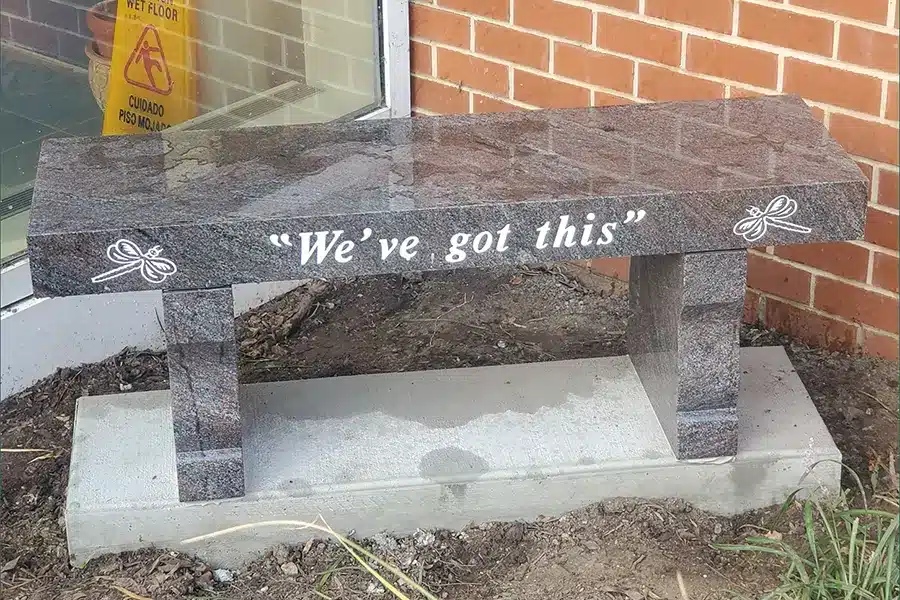
Cemetery benches are a meaningful way to create a quiet place for reflection while honoring a loved one. Whether placed alongside a headstone, incorporated into a family plot, or installed as a standalone memorial, benches offer both function and symbolism. However, before installing a cemetery bench, families must understand placement rights, cemetery permits, and proper etiquette, especially in regions like Maryland, Washington DC, Virginia, and Pennsylvania, where regulations can vary widely. At Tegeler Monument Company, families are guided through every detail of bench memorial planning to ensure compliance, durability, and respectful design
What Is a Cemetery Bench?
A cemetery bench is a memorial structure designed for both remembrance and seating. These benches are typically made from durable materials such as granite, marble, or bronze and may include engraved names, dates, or inscriptions, similar to a headstone or gravestone.
Benches can serve multiple purposes. They provide a place to sit and reflect. They can mark a burial or cremation site, complement an existing monument, or create a shared memorial space for families. Because they combine functionality with memorialization, benches are increasingly popular in family plots and cremation gardens.
Understanding Placement Rights in Cemeteries
Before selecting a cemetery bench, it’s important to understand that owning a burial plot does not automatically grant the right to place additional structures like benches.
Cemeteries typically control:
- What types of memorials are allowed
- Where benches can be placed
- The size, material, and design of benches
Some cemeteries allow benches only in designated sections, such as cremation gardens or memorial parks, while others permit them within family plots under specific conditions.
In many cases, placement rights depend on:
- The size of the plot
- The number of interments
- Existing headstones or monuments already installed
- Cemetery section or designation (traditional, cremation garden, or memorial park)
- Spacing requirements between graves and surrounding features
- Local cemetery rules regarding additional structures or memorials
- Approval from cemetery management or governing authority
Working with an experienced provider like Tegeler Monument Company ensures that your chosen bench complies with all local cemetery requirements.
Do You Need a Permit for a Cemetery Bench?
Yes. Most cemeteries require a permit before any bench installation can take place. This applies whether the bench is being added to an existing grave or installed in a new section.
Permits typically involve:
- Submitting design specifications
- Confirming dimensions and materials
- Reviewing placement location
- Scheduling installation approval
Permit fees vary by cemetery and may be separate from installation costs.
Some cemeteries in Maryland and DC are particularly strict, requiring:
- Pre-approval of inscriptions
- Engineering details for the foundation
- Proof of professional installation
Skipping the permit process can result in delays, additional fees, or even removal of the bench.
Common Cemetery Bench Regulations
While every cemetery has its own rules, there are common guidelines families should expect.
Size and Design Restrictions
Many cemeteries limit the size and style of benches to maintain a uniform appearance. Oversized or highly customized designs may not be permitted in certain sections.
Material Requirements
Durable materials like granite are typically required to ensure longevity and safety. Wood or less stable materials are usually not allowed.
Placement Guidelines
Benches must be positioned so they do not interfere with adjacent graves, walkways or maintenance paths, landscaping, or irrigation systems.
Foundation Standards
Proper foundations are essential for stability. Most cemeteries require concrete bases. They also often require specific depth and reinforcement and professional installation. These rules are designed to preserve the cemetery’s appearance and ensure long-term safety.
Where Can Cemetery Benches Be Placed?
Placement depends on cemetery layout and regulations, but common options include:
- At the foot of a headstone within a family plot
- Alongside companion graves
- In designated memorial or cremation garden areas
- As part of a private family estate section
Some cemeteries also allow benches to serve as the primary memorial marker, especially for cremation burials. Because placement rules vary, it’s important to confirm details before purchasing a bench.
Types of Cemetery Benches
Cemetery benches come in several styles, each with different purposes and design options.
Memorial Benches with Backrests
These resemble traditional park benches and often include engraved panels on the seat or back. They provide a comfortable place for extended visits.
Flat Seat Benches
These are simpler in design and may function similarly to a low-profile monument. They are often used in cemeteries with stricter design guidelines.
Pedestal Benches
These benches sit on solid bases and can incorporate inscriptions on both the seat and pedestal, offering a balance between seating and memorialization. The right choice depends on cemetery regulations, personal preference, and budget.
Installation Considerations
Installing a cemetery bench involves more than simply placing it on the ground. Proper installation ensures stability, safety, and long-term durability.
Key considerations include:
- Foundation requirements based on soil and climate
- Weight and dimensions of the bench
- Accessibility for installation equipment
- Compliance with cemetery scheduling
In regions like Maryland and Pennsylvania, frost depth and seasonal weather can affect how foundations are constructed, making professional installation essential.
Cemetery Bench Etiquette
In addition to rules and permits, families should also consider etiquette when installing a cemetery bench. These guidelines help maintain respect for others and preserve the overall atmosphere of the cemetery.
Respecting Space and Boundaries
Benches should not encroach on neighboring plots or obstruct access to other graves. Proper placement ensures that all families can visit comfortably.
Maintaining a Cohesive Appearance
While personalization is important, benches should align with the cemetery’s overall aesthetic. Extremely bold or unconventional designs may not be appropriate in traditional settings.
Keeping the Area Clean
Regular maintenance, such as removing debris or seasonal decorations, helps preserve the dignity of the space.
Being Mindful of Visitors
Benches are intended for quiet reflection. Keeping noise levels low and respecting the solemn environment is essential. Etiquette is just as important as compliance. It ensures that memorial spaces remain peaceful for everyone.
Costs Associated with Cemetery Benches
The total cost of a cemetery bench includes several components beyond the bench itself. These may include:
- Bench design and material costs
- Cemetery permit fees
- Installation and foundation work
- Engraving or customization
Prices can vary widely depending on size, material, and location, but planning ahead helps families stay within budget.
Why Families Choose Cemetery Benches
Cemetery benches offer a unique combination of function and memorialization. Families often choose benches because they create a comfortable place for visits and serve as a shared family memorial. They complement existing headstones or monuments and provide a lasting, visible tribute. For many, a bench transforms a gravesite into a more personal and inviting space.
Local Considerations in MD, DC, VA, and PA
Cemetery regulations in the Mid-Atlantic region can differ significantly. Maryland and Washington DC often have stricter permit processes and design guidelines. Virginia may offer more flexibility depending on the cemetery. Pennsylvania frequently requires deeper foundations due to climate conditions. Working with a local expert ensures that all regional requirements are met without delays.
Contact Tegeler Monument Company
Choosing and installing a cemetery bench is a meaningful decision, but it also involves navigating rules, permits, and design considerations. Having the right guidance can make all the difference.
At Tegeler Monument Company, we help families across Maryland, Washington DC, Virginia, and Pennsylvania design and install cemetery benches that meet all regulations while honoring their loved ones with dignity and care.
If you are considering a cemetery bench for a family plot or memorial space, contact us today. We’ll guide you through placement rights, permits, and design options to ensure a seamless and respectful process.
Comments are closed