
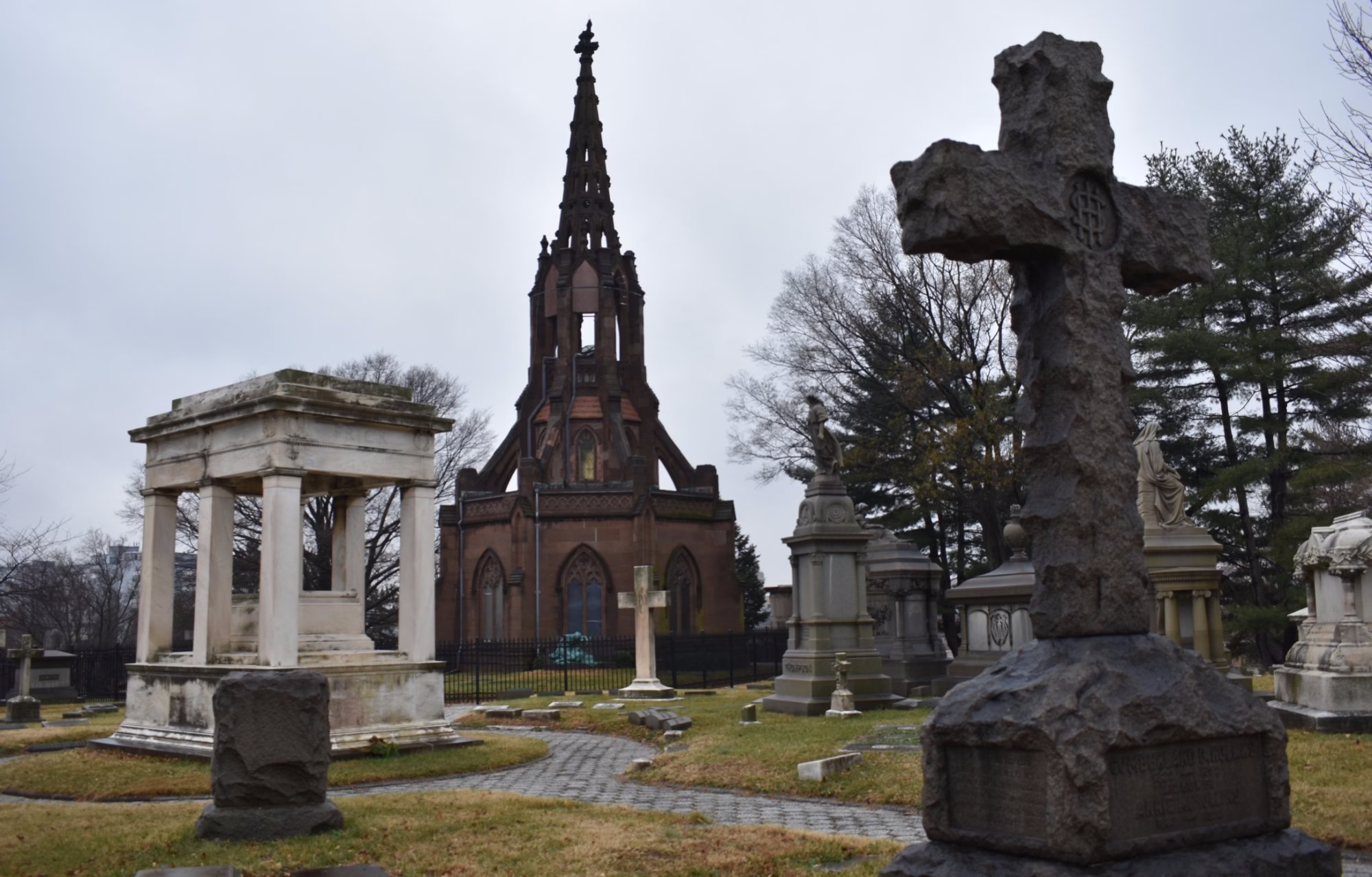
Maryland is a state rich with history, shaped by early settlers, revolutionaries, farmers, watermen, soldiers, pastors, and everyday families whose lives helped build the region we know today. While some history is recorded in archives or museums, much more of it rests quietly beneath the grass in old burial grounds scattered throughout cities, farmland, and coastal towns. Cemeteries are not simply places where life ends. They are places where stories remain. They hold memory, faith, lineage, grief, and change.
Some headstones are beautifully preserved. Others have softened with rain and time. Many carry symbols once common but now forgotten. Clasped hands. Weeping willow trees. Anchors. Lambs. Broken columns to symbolize a life cut short. Beneath each marker lies a story of a family who loved someone enough to carve their name in stone so they would not be forgotten.
For families planning a headstone or monument today, looking back at older memorials can provide inspiration. The design of headstones has changed across centuries, but the purpose remains the same.
Below is a look from Tegeler Monument Company at some of the oldest cemeteries in Maryland, what their stones can teach us, and how their history connects to modern memorial choices made by families in Maryland, Virginia, Washington DC, and Pennsylvania.
Historic Cemeteries in Maryland and What Makes Them Significant
Maryland has hundreds of active and historic cemeteries, but a few stand out due to age, preservation, and the stories hidden in their markers. Visiting one allows you to step into a different century. Many families considering monuments find comfort in walking older grounds as a reminder that memorials endure longer than memory itself. Where handwriting fades from family journals and photographs are lost, stone remains.
Some of the oldest cemeteries in Maryland include:
- Westminster Burial Ground in Baltimore
- Old Trinity Churchyard in Church Creek
- All Hallows Church Cemetery in Davidsonville
- Pauls Cemetery in Chestertown
- Cabinet Graveyard at the Naval Academy in Annapolis
- Old Bohemia Cemetery in Warwick
- Mount Olivet Cemetery in Frederick
Each site teaches something different about the time in which it was built and the people who rest there.
Westminster Burial Ground Baltimore
Westminster Burial Ground, founded in the 1700s, is home to one of the most famous burials in Maryland. Edgar Allan Poe rests here, along with veterans of the American Revolution and early leaders of Baltimore. The cemetery is a maze of Gothic architecture, iron fencing, stone vaults, and above ground tombs. The headstones are dramatic and detailed, especially compared to early colonial stone.
Stories here are carved directly into the rock. Family plots lined beneath trees. Mausoleums with hand cut marble fronts. Historic symbols of death and rebirth. Seeing them shows how different marker choices express legacy. A flush memorial rests quietly. A tall upright monument declares presence. A mausoleum stands as a permanent structure that protects memory from time.
Families planning a monument today may find themselves drawn to the history of stone like this. It demonstrates why material matters. Granite now survives far longer than marble once did and is ideal for families who want permanence equivalent to the deep roots found at Westminster.
Old Trinity Churchyard Dorchester County
Old Trinity Church is among the oldest churches in continual use in the United States, and its cemetery marks graves from the mid-1600s forward. Many markers here are simple and shaped like what we now call tablet headstones. The wear of salt air from the Chesapeake has softened many inscriptions, making the lessons of stone durability clear. Marble and sandstone weaken much faster near coastal winds and moisture, while granite headstones in modern burial grounds remain clear for generations.
One of the most striking elements of Old Trinity Churchyard is how many family plots stretch across centuries. Children buried beside parents. Parents beside grandparents. Rows of shared surnames that reveal multi-generational connection to place. For families choosing monuments today, this reminds us that headstones are not only for the person who has passed. They anchor history for those who come later seeking ancestry.
All Hallows Church Cemetery in Davidsonville
All Hallows, established in 1692, is known for rows of intricately carved eighteenth-century tablets and colonial granite markers. The cemetery is rich with British symbolism, including winged skulls, hourglasses, willow motifs, and biblical inscriptions carved with remarkable skill for their time. Many markers reflect Anglican burial tradition and record early Maryland militia, farmers, and craftsmen who built the foundation of Anne Arundel County.
This cemetery shows the evolution of stone lettering. Early markers used shallow hand-cut etching, while modern granite allows deeper sandblasting and laser work that is more readable across centuries. The lived-in feel of All Hallows influences families today who choose inscriptions like psalms, signatures, or etched imagery because they want a headstone to tell a full story. Just as stones here mark lives long gone, modern granite markers ensure the names and stories of present families survive for future generations.
St. Paul’s Cemetery in Chestertown
St. Paul’s Cemetery is a remarkable place for those interested in American religious history. Many Quaker and Anglican families are buried here, and the cemetery layout reflects early settlement patterns in the Chester River region. Gravestones range from soft sandstone memorials to mid-nineteenth-century granite tablets that remain surprisingly crisp. This difference alone teaches a valuable lesson to families choosing headstones today. Granite stands up to weather cycles in a way early settlers could only hope for.
Visitors often note ornate epitaphs, scripture passages, and family crests on older stones. These inscriptions demonstrate the desire to preserve identity long after burial. Modern families often replicate this idea using companion markers, family name monuments, or benches with engraved quotations. St. Paul’s also reminds monument buyers to consider cemetery regulations, since historic locations often have strict rules about height, shape, and monument placement.
The Cemetery at the U.S. Naval Academy in Annapolis
This cemetery is uniquely solemn. Generations of Naval officers, war heroes, and service families rest here under white markers and monumental plaques. The cemetery holds shared mausoleums, upright headstones in military formation, and memorial structures honoring those who served. Many visitors experience a sense of reverence here, not only for military connection but for the clean structural aesthetic of rows of uniform stone.
Families designing memorials today often draw inspiration from this formality. Companion headstones with matching fonts. Black granite with polished edges. Bronze plaques mounted to a granite base for longevity. While marble was once standard for military markers, granite is now preferred for longer visibility. The Naval Academy cemetery teaches that a monument is not only about individual identity, but often about shared service, shared love, and shared pride.
Old Bohemia Cemetery in Warwick
The Old Bohemia Cemetery, founded in 1704 near the Jesuit Mission of Old Bohemia, contains some of the most spiritually expressive memorials in the state. Many Catholic priests, educators, and parishioners are buried here, and the inscriptions often reflect deep devotion to faith. Crosses are common, as are biblical carvings and Latin epitaphs that reflect European influence. The stones vary in thickness and wear, creating an unforgettable mix of preserved and faded memory. This variation shows why granite matters.
Mount Olivet Cemetery in Frederick
Mount Olivet, built in the nineteenth century, is known for beautifully preserved Victorian headstones, obelisks, angels, carved drapery, and family mausoleums. Francis Scott Key, author of the National Anthem, rests here beneath a striking monument surrounded by gardens and walkways. This cemetery blends art with history more than almost any other in the state. Many choose to visit Mount Olivet for design inspiration before selecting their own memorial style.
The Symbolism Hidden in Early Maryland Stones
Older cemeteries reveal a language not many people recognize today. Symbols carved into granite or marble once served as universal imagery to convey meaning long after death. Recognizing these symbols can help guide design choices for headstones, mausoleums, cremation monuments, or cemetery benches today.
Common symbols include:
- Lambs representing innocence often used for children
- Weeping willow trees symbolizing mourning and eternal life
- Anchors for hope sailors or those tied to water
- Clasped hands for marriage unity or reunion in death
- Broken columns marking a life ended too soon
- Ferns and ivy for everlasting memory
Many families today choose personalized symbols to reflect passions, hobbies, or faith. Granite allows these engravings to last far longer than traditional marble carvings, preserving meaning in a way that is strong and future facing.
How These Cemeteries Influence Modern Monument Design
The oldest cemeteries in Maryland are proof that memorials endure well beyond a lifetime. They also show how materials, inscription style, and design determine how long a memorial communicates clearly. Granite is now the preferred stone for headstones and monuments because it resists erosion, fading, and fracture. Families who want a marker to survive as long as those in Leonardtown or Church Creek often select granite for that reason.
Modern monuments may be upright headstones, double memorials, flush markers, cemetery benches, family mausoleums, or cremation columbaria. Each option offers its own visual weight. Standing stones honor presence. Flush markers feel humble and grounded. Benches provide a place to sit and reflect. Mausoleums elevate legacy and protect remains. When choosing any of these memorial types, looking at older cemeteries can help families decide what feels right.
Cemeteries With Stories Etched in Stone
The stones in old burial grounds are more than markers. They are history carved into granite and marble. They remind us that people before us lived full lives, grieved, loved, married, built homes, worked land, fought in wars, and raised families. Their presence remains visible through time because someone chose a permanent memorial.
Families creating headstones today continue that tradition. Whether selecting an upright granite monument, a flush grave marker, a companion headstone, or a cemetery bench with engraved artwork, the intention is the same. To remember, honor, and keep a name alive.
Choosing a Monument That Will Stand the Test of Time
The lessons found in historic Maryland cemeteries can guide families in selecting markers today. When choosing a headstone or memorial, consider material durability, cemetery regulations, personalization options, and what design best reflects the person being honored.
Granite remains the strongest stone for long term outdoor use. It is available in many colors such as black, gray, red, brown, and rare green or blue variants. Families can include etched photographs, symbols of faith or hobbies, and personalized inscriptions written in script or block lettering. The marker chosen today becomes part of the landscape for future generations just as the oldest cemeteries have become part of the story of Maryland itself.
For those seeking a lasting memorial in Maryland, Virginia, Washington DC, or Pennsylvania, working with a local monument company ensures proper placement, engraving, and design support. A well chosen headstone does more than mark a grave. It carries a legacy.
Contact Tegeler Monument Company
Tegeler Monument Company has served families throughout Maryland and the surrounding region for decades, helping them choose headstones, cemetery monuments, mausoleums, full memorial designs, cremation columbaria, granite benches, and flush markers that endure. If you would like guidance selecting a monument or designing a memorial that reflects your loved ones story with dignity and care, we are here to help. You can visit our showroom to view granite color options in person or speak with a memorial specialist for recommendations. Contact us at (410) 944-0300 or fill out our online form to begin planning.
Comments are closed